CHARGEBEE · 2023 – 2024
Designing Governance at Scale
A strategic initiative to introduce maker-checker workflows across Chargebee billing — balancing enterprise governance, delivery constraints, and team growth.
Role
Product Design Manager
Timeline
Multi-quarter
Team
Designer · UXW · PM · Eng · DS
Platform
Billing Web App
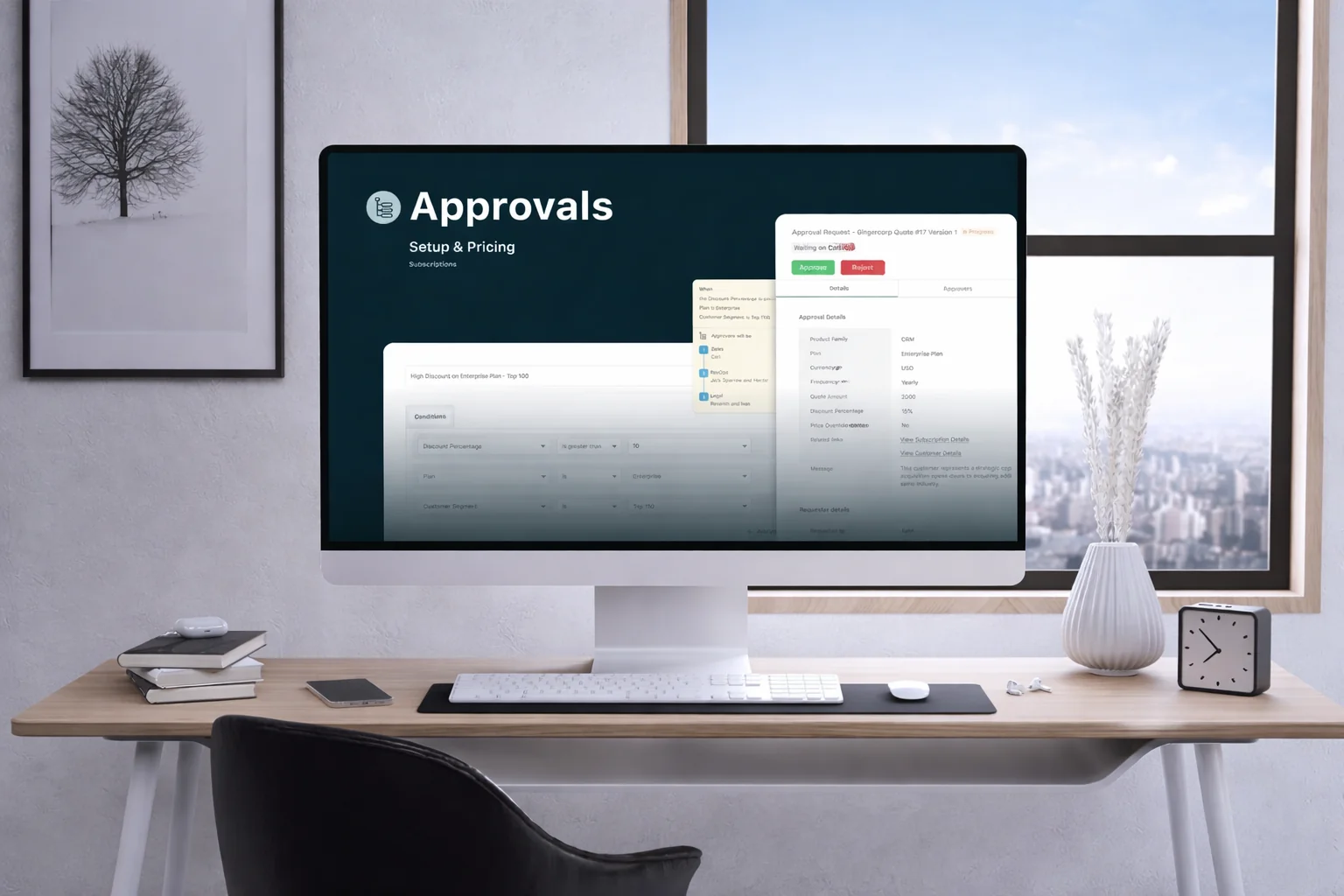
Governance became the price of moving upmarket
As Chargebee moved upmarket, enterprise customers increasingly demanded governance controls across critical billing workflows. One of the most requested capabilities was Approvals — structured maker-checker processes across subscriptions, invoices, credit notes, and quotes to ensure auditability and control.
But it wasn't a simple feature request. It surfaced deeper tensions:
- Speed versus long-term maintainability
- UX clarity versus technical constraints
- Feature delivery versus team capability building
For me, this project was as much about how we worked as what we shipped.
Design the feature — and the way the team operated
01
Visibility
Make design thinking visible beyond the squad by engaging executives early and sharing our reasoning, not just screens.
02
Capability
Grow the designer and UX writer beyond execution into problem framing, research, and strategic thinking.
03
Process adoption
Champion Conversation Design to Prototyping as a repeatable approach for complex enterprise features.
Three perspectives, one MVP
- The Senior Product Design Director emphasized reuse and alignment with the newly formed Design Systems team.
- PMs were concerned about timelines and preferred skipping system adoption to move faster.
- The CPO raised a strategic question about external approvers — could non-Chargebee users approve via email or Slack without licenses?
These perspectives were valid but conflicting. To move forward, I facilitated scope clarity: an MVP focused on internal billing teams approving subscriptions, invoices, and credit notes. Quotes — with sales and external stakeholders — were consciously deferred to a later phase.
Decision
Ship meaningful value to heavy Chargebee users first. Defer external-approver ambiguity to phase two.
Beyond execution — mentoring into problem framing
I led a newly formed team consisting of a product designer strong in visual execution and a UX writer curious about research and product thinking. Instead of jumping into Figma, I intentionally slowed the team down.
- Mapped personas and workflows for Requestors, Approvers, and Admins
- Ran conversation design sessions to understand how approvals should feel before designing screens
- Reviewed competitors for both feature depth and experience patterns
- Brought PMs and CSMs into discussions to ground decisions in real customer pain
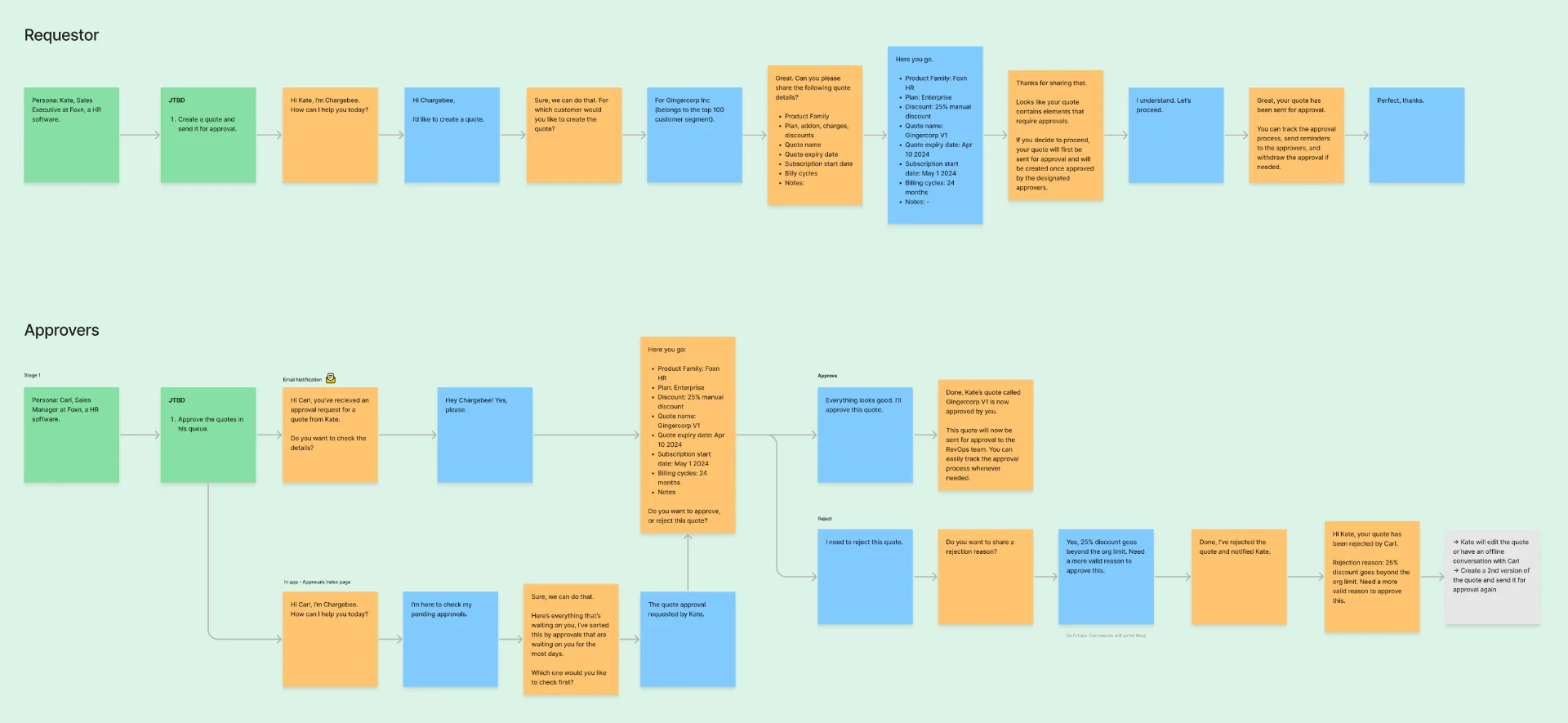
Rather than prescribing solutions, I guided selectively — giving them space to explore and learn.
Direct customer contact changed the team's confidence
Due to limited research bandwidth, I personally ran one of the usability tests. We focused on admins creating approval rules, requestors triggering approvals, and approvers reviewing and acting on requests.
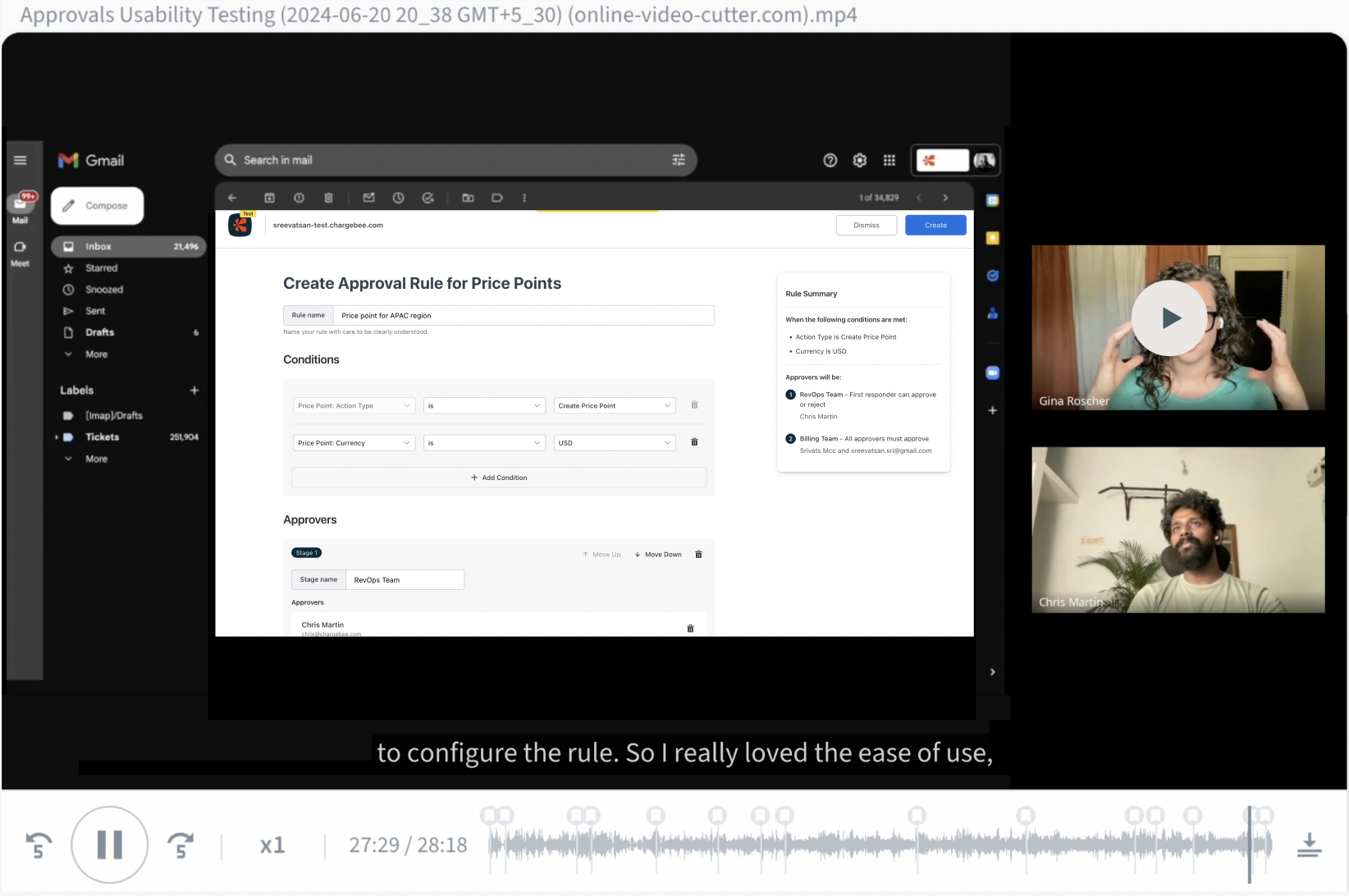
One moment stayed with us
A customer loved the design and asked when they could start using it. We had to explain it wouldn't work on their legacy version. It was a reminder that enterprise UX lives within technical reality — and helped the team empathise more deeply with PMs and engineers.
Stepping in as temporary program manager
Midway through the project, delivery slowed. Frontend teams were blocked on shared component reviews; Design Systems needed more time to ensure reusability; PMs were concerned about slipping timelines.
- Mapped dependencies across teams
- Created a page-by-page delivery plan
- Identified what could ship independently
- Reset expectations while protecting design quality
This intervention helped unblock progress and rebuild trust across design, engineering, and product.
Conversation Design to Prototyping, applied end-to-end
Approvals became the first project where we fully applied Conversation Design to Prototyping as a strategy. Despite initial skepticism, we shipped an interactive prototype early — which reduced UX risk, aligned stakeholders, and impressed executives.
The squad later became a reference example. Other teams adopted the same approach for complex features.
The impact extended beyond the feature
Days → Hours
Cycle time
Approval cycles compressed for enterprise billing teams.
Audit-ready
Governance
Trust and auditability built into billing workflows.
Reference squad
Process adoption
New ways of working spread across the design org.
For customers
- —Approval cycles reduced from days to hours
- —Increased trust and auditability in billing workflows
For the organisation
- —A validated MVP for internal billing approvals
- —A strong foundation for future external approver workflows
- —Improved collaboration between design, eng, and systems
For the team
- —Increased confidence in enterprise problem framing
- —UX writer growth into research and conversation mapping
- —A shared sense of ownership and pride
Why this work matters
Approvals was not just a feature launch. It was a moment where the team matured, new processes took root, and design gained credibility at the executive level.
Mentor deeply. Lead lightly. Stay grounded in customer reality.
Let's
Talk
I'm most energized by work where I can dig into complex problems, collaborate with smart people, and ship things that genuinely improve someone's day.

Sreevatsan
Let's talk about AI, Design and any other interesting conversations about hard design problems.