CHARGEBEE · CPQ · 2024
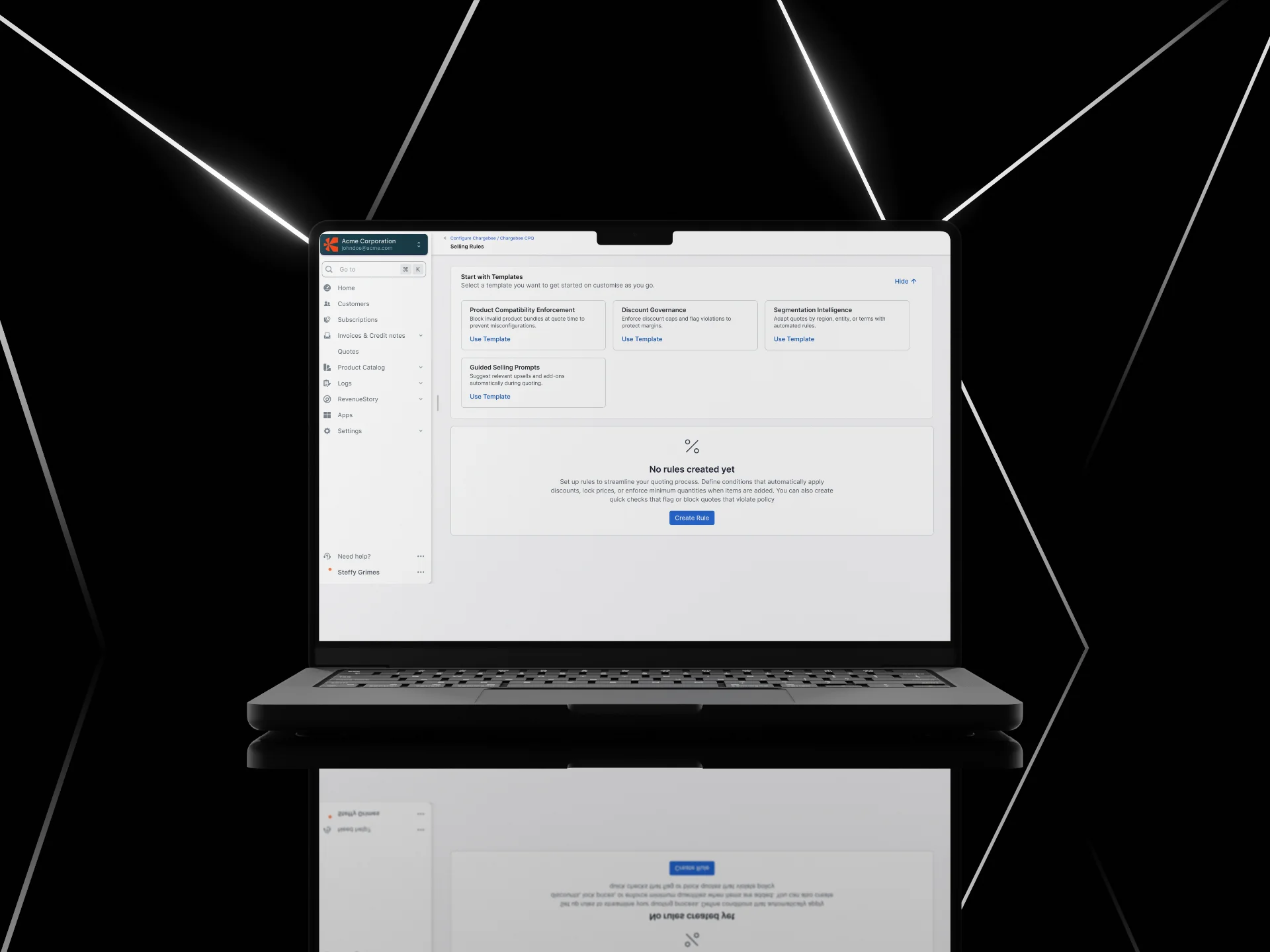
Selling Rules
Protecting revenue in enterprise deals — a 0→1 governance layer that helped B2B teams control discounts, product combinations, pricing exceptions, and approvals during quote creation.
Role
Solo Product Designer
Timeline
6 months
Team
PM · BE · FE
Platform
CPQ Web App
Chargebee was expanding earlier into the revenue workflow
Before, Chargebee was strongest after a deal was closed — subscriptions, billing, renewals.
As the company moved upmarket, it needed to support more of what happened before a deal became a subscription: quotes, approvals, and selling rules.
Scope shift
From Approval → Subscription → Billing → Renewals to the full lifecycle, with Selling Rules planted at the quote step.
Small pricing decisions, compounding revenue risk
Enterprise customers were managing complex quotes with custom discounts, bundles, price overrides, and approvals. Without guardrails, small pricing decisions created revenue leakage, approval overload, and slower deals.
2–5%
Revenue leakage
Small pricing and approval mistakes compounding across hundreds of quotes per quarter.
1,440
Approvals / year
A 25-rep team can generate this many manual approval requests annually.
$3.8M
ARR exposure
Conservative model for high-value accounts without enterprise selling controls.
Revenue decisions were happening outside the product
Sales reps relied on Notion, Slack, manager approvals, spreadsheets, and external CPQ tools to understand what was allowed. Every unclear discount or product combination became a manual decision.
"Can I give this discount?"
"Can these products be sold together?"
"Can this price be overridden?"
"Can this quote be submitted?"
The system did not help them make decisions.
Three principles that shaped every screen
01
Reduce reliance on approvals
Encode policy as logic, not a human bottleneck.
02
Guide reps to the right decisions
In the moment, in context, without leaving the quote.
03
Show what's happening and why
Every block, warning, and recommendation is explainable.
The four decisions that shaped the system
Decision 01
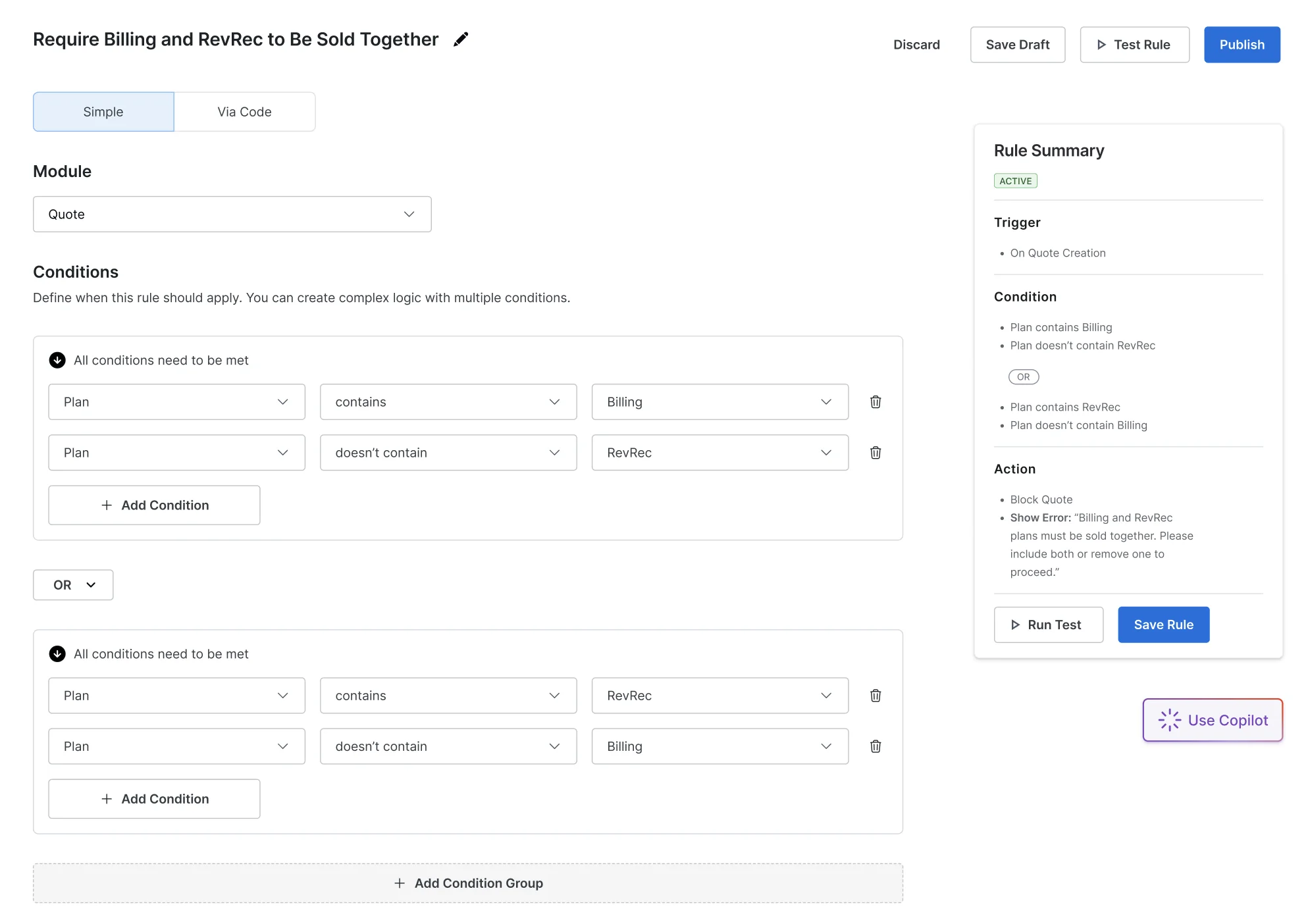
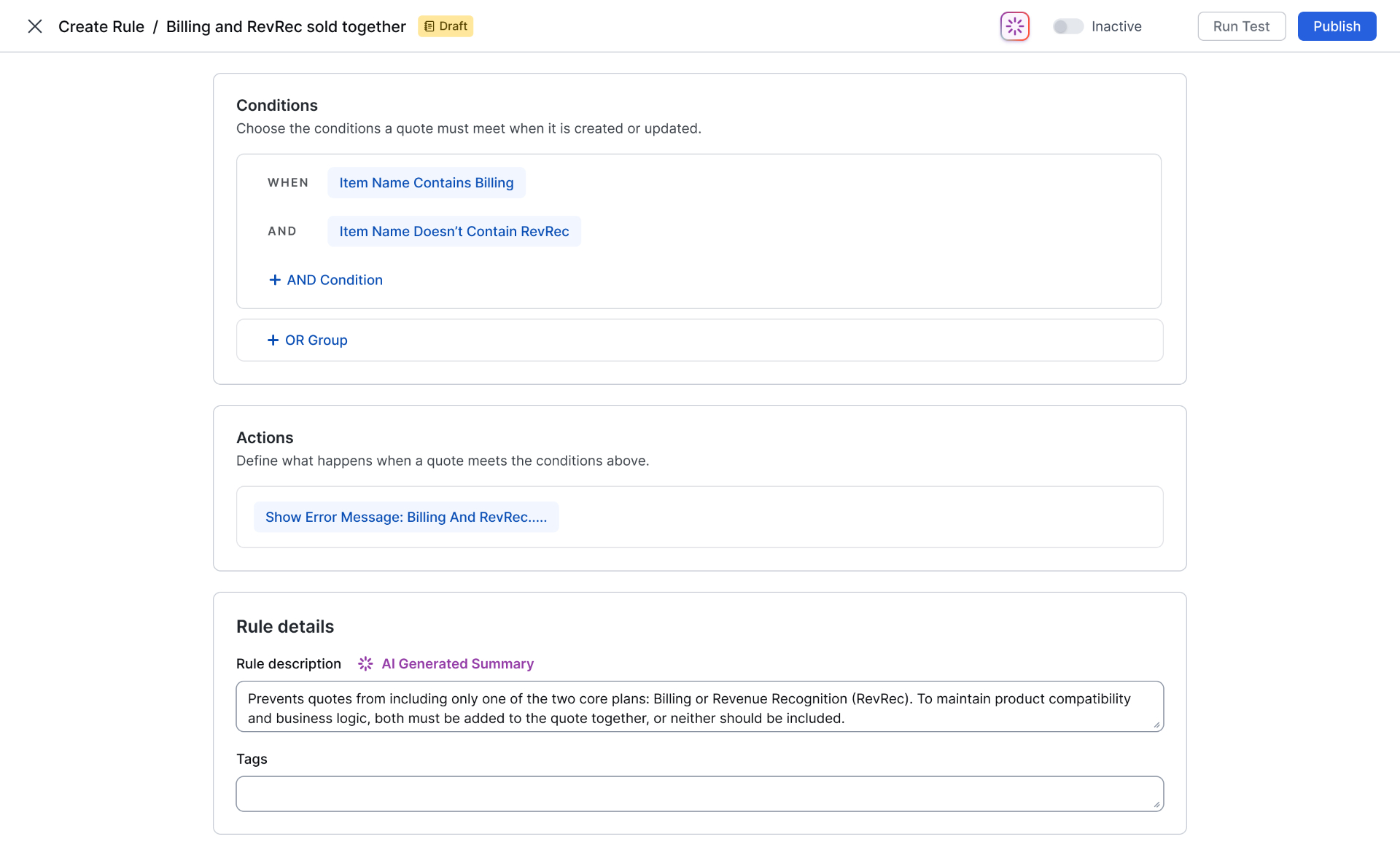
Rules are created by admins, but felt by reps.
Admins need configuration depth — discounts, bundles, approval thresholds. Reps need simple, timely guidance while inside a quote. Two surfaces, one rule model.
Admin — rule defined
Rep — felt in-quote
Decision 02
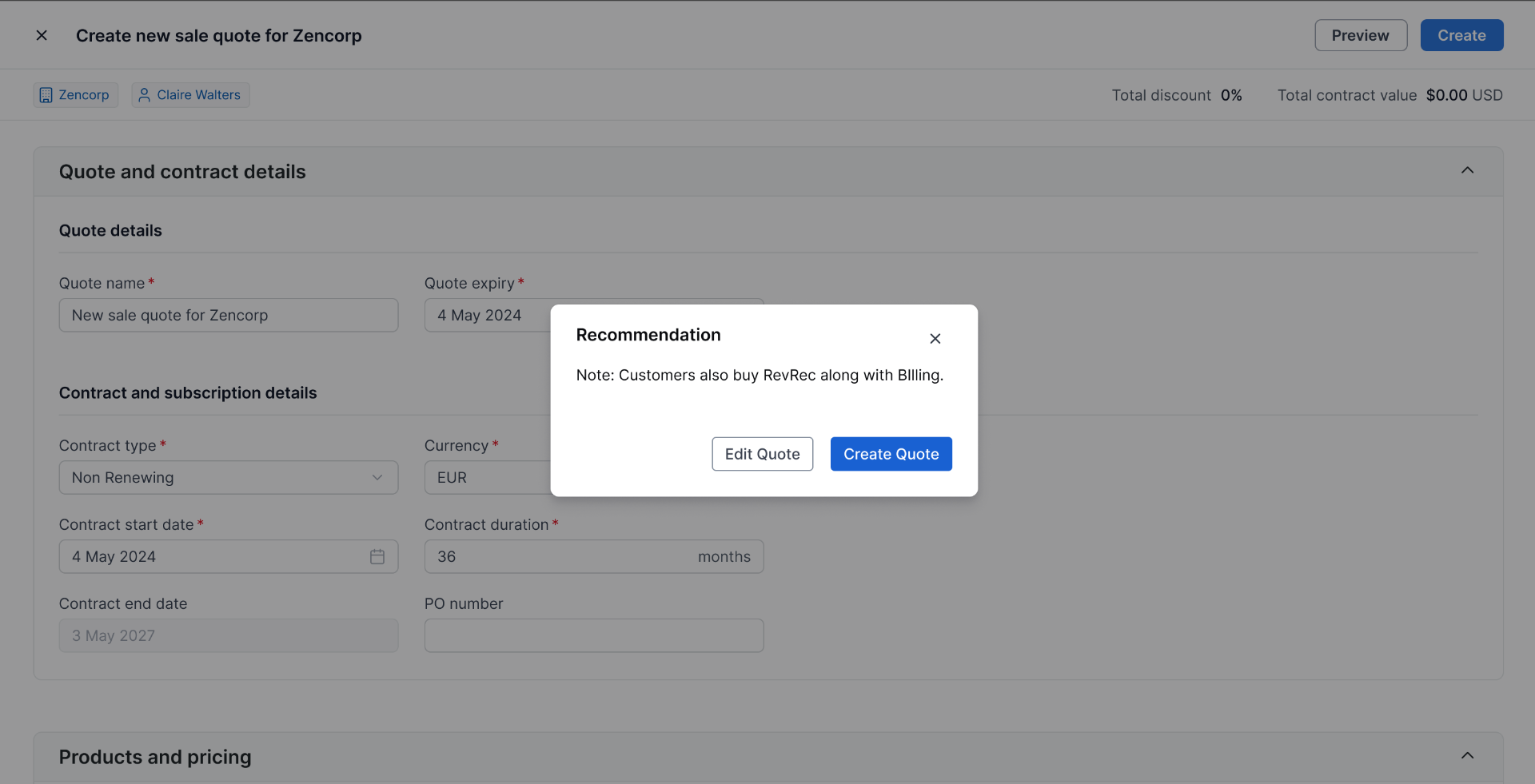
Not everything needs to go through approval.
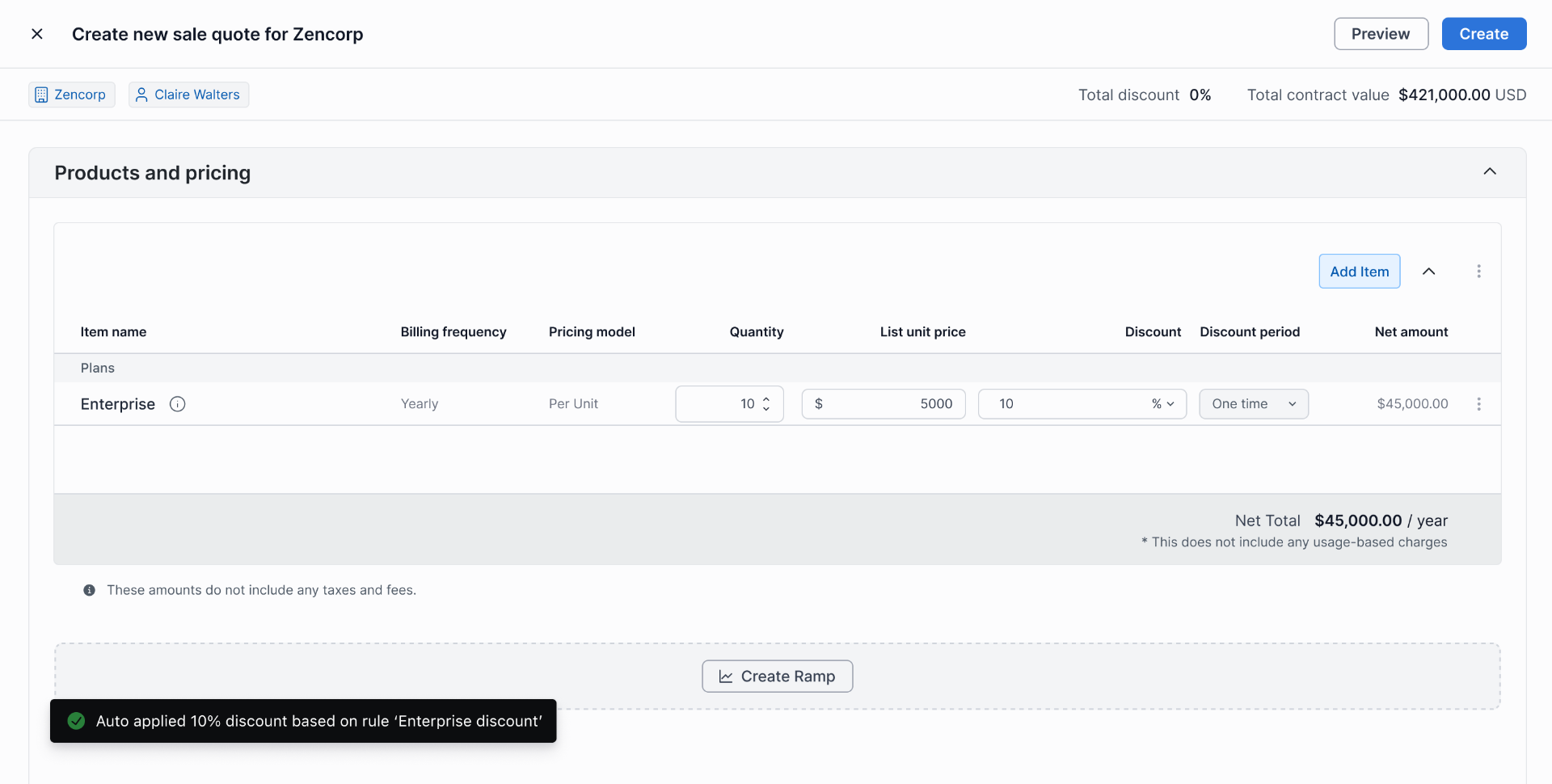
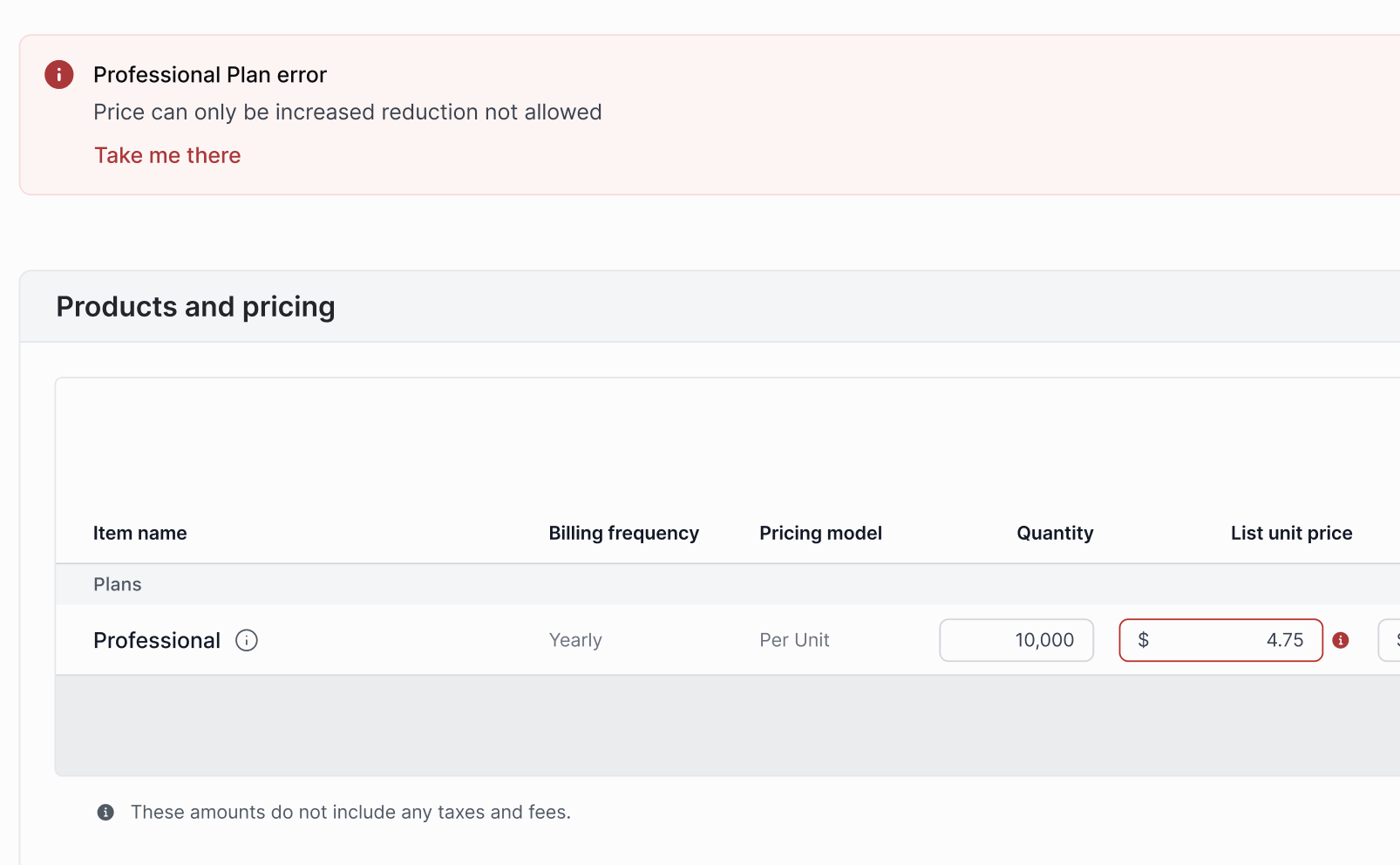
Three action types handle most cases without ever creating an approval request: recommend a cross-sell, auto-apply a discount, or block the change outright.
Decision 03
The action panel needed to scale.
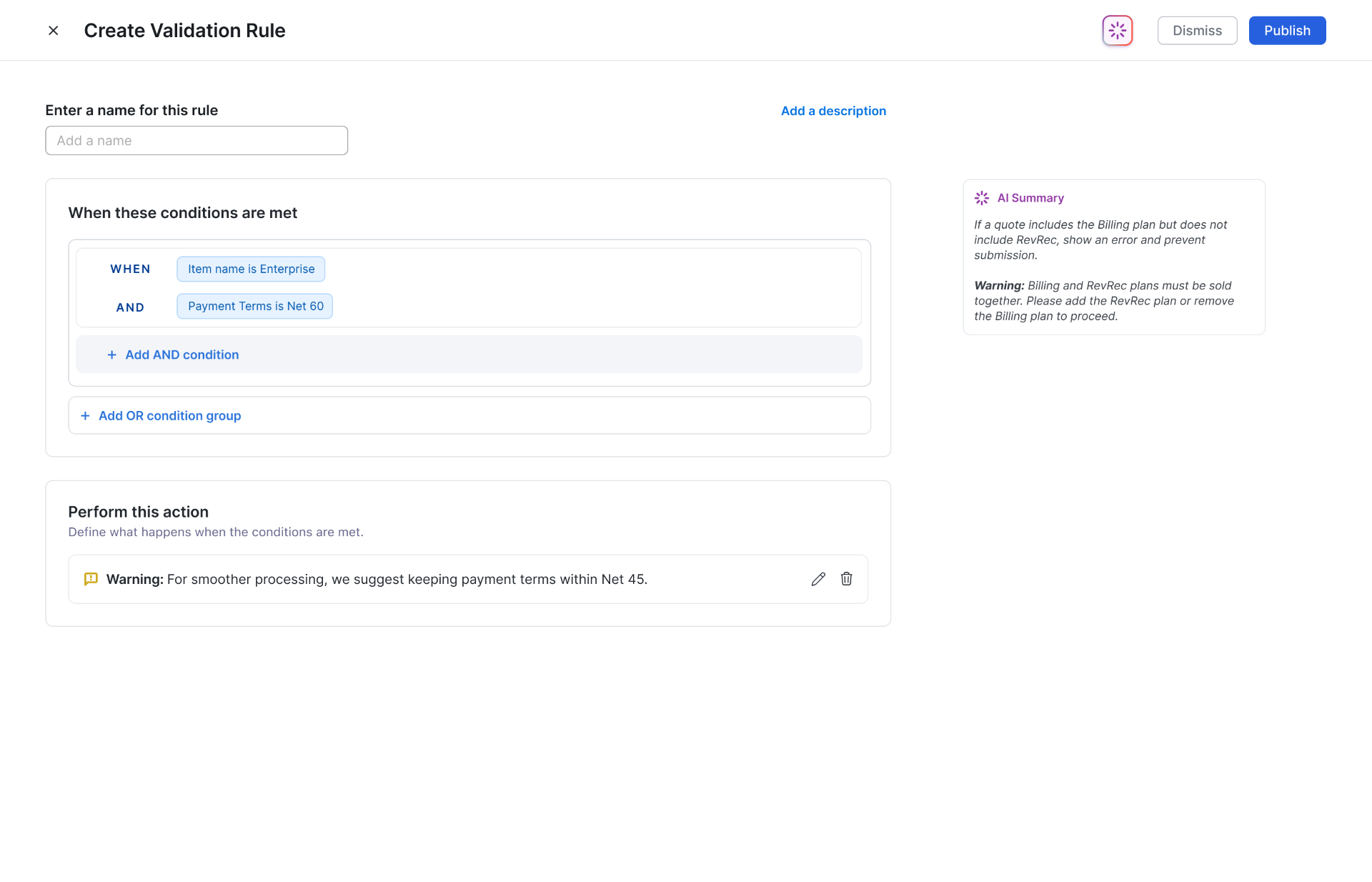
Inline actions on the canvas looked cleaner and tested well early, but they did not scale for rules involving hundreds of products. Final: compact-on-canvas with an expand-to-configure flow.
Decision 04
AI rule creation was too risky for business-critical policies in v1.
A Copilot that writes selling rules sounds compelling — but a hallucinated discount rule is a revenue incident. For v1, AI ships as summaries and previews. Rule authoring stays human.
Two experiences, one governance layer
Admin experience
Define policies once
Admins author selling guardrails — discounts, product combinations, approval rules, pricing exceptions — with previews and AI summaries.
Sales rep experience
Real-time guidance during quoting
Reps see what is allowed, what is blocked, and what needs approval as they build the quote.
From manual approvals to in-product guardrails
$3.8M
ARR exposure addressed
Modeled across 640 large/enterprise customers at 6% risk × $100K ACV.
1,440
Approvals avoided / year
A 25-rep team's annual policy checks now resolved in-product.
↓
Customer signal
Pilot customers reported fewer manual approvals and escalations after rollout.
Translating business policy into product behavior — while balancing control, flexibility, and speed at enterprise scale.
Let's
Talk
I'm most energized by work where I can dig into complex problems, collaborate with smart people, and ship things that genuinely improve someone's day.

Sreevatsan
Let's talk about AI, Design and any other interesting conversations about hard design problems.